HOW TO GET THE MOST VALUE OUT OF YOUR CHAMBER OF COMMERCE

Joining your local chamber of commerce has long been recommended for small businesses, particularly those who serve local markets with their products or services.

In a recent discussion on OPEN Forum, members discussed some of the limitations as well as the best ways to get value from your local chamber of commerce.

A Main Local Resource
“I see chambers, first and foremost, as educational and training centers for businesses in the community,” says Zev Asch, president and CEO of Ledaza, a sales and marketing consulting agency for small businesses based in Melville, New York. Chambers of commerce often sponsor events offered to members at a discount, such as seminars run by experts in sales and marketing, Microsoft Excel, or other niche topics relevant to many business owners.

As a member, you also have the opportunity to present seminars if you have something relevant to offer other members. Erroin Martin, business advocate for Von Gehr Consulting Group, belongs to two local chambers of commerce. “Both chambers have helped me grow my business through networking groups, speaking engagements, and through the volunteering I have done for them,” Martin says.

To offer your speaking services for an upcoming event, or suggest a workshop that you’re qualified to lead. “These are a great way to build visibility and credibility—especially if your chamber has a series or programs reaching your specific target audience,” explains Michael Montgomery, a fundraising and economic development consultant with his own firm, Montgomery Consulting.
Get Your Name Out There
“Service on chamber committees and/or the board can also help you build stature in your community,” Montgomery suggests. Even if your company doesn’t serve the B2B market, those networking connections can lead to referrals and potential partnerships that could take your business to the next level.

Some chambers could focus more on offering ways to aid local businesses in branding, customer acquisition and growth. “To give real value and actually help the members, I think it’s imperative to provide information and resources that teach them how to attract customers in the real world. Get people who know how to generate qualified leads, convert them and repeat the process at-will to come in and show them how to work on their business, not in it,” says Jeff Motter, CEO and chief marketing officer of East Bay Marketing Group.

Pinaki Saha, CEO and owner of Anshar Labs, a mobile and social application-development company, agrees that “chambers must help the business to sell, grow and find customers in the community. And that can only happen if you are dialed into the community through channels, social media, business relationships and best practice advising.”

If you’re a member and you can help your local chamber enhance its benefits, offer your services. It can only lead to more exposure for your company.

Special Events
Some chambers are already doing it right, offering targeted opportunities geared specifically to niche membership segments. The Brooklyn Chamber of Commerce, for instance, regularly orchestrates events that are helpful for small, growing companies in the area, according to Michelle Lewis, owner of Spoonable, a small artisan food business. Lewis says the Brooklyn Chamber hosted Brooklyn Eats, a trade show focused on the Brooklyn food manufacturer community, which led to her acquiring many new customers.

“The chamber also hosted a Brooklyn Pavilion at the Fancy Food Show, allowing small businesses like me to have a table for $1,500 instead of the usual $10,000 to $12,000 it costs to attend,” Lewis explains. “That brought Spoonable a boatload of new customers—we’re still trying to catch up—and significantly contributed to the fact that we are in 140 stores across the U.S. in just two years.”

Standard Benefits
With the Affordable Care Act underway and health insurance exchanges available online, low-cost health insurance is no longer a major incentive for joining a chamber of commerce. Still, many time-tested chamber of commerce benefits are still valuable. “Most offer discounts for chamber members—discounts on printing, car rental, advertising and sometimes facility rentals are all common membership perks,” Montgomery says. He also mentions being listed in the chamber business directory, which may cost an additional fee depending on your local chamber’s policies.

The bottom line is that joining your local chamber of commerce is valuable—provided you take the initiative to make it work for you. And that means taking an active role and participating whenever possible. “At the end of the day, we, as members, need to ask for what we need,” advises Elene Cafasso of Enerpace. “We need to get involved and provide suggestions.”

Why It’s Important To Belong To A Chamber Of Commerce.

“Are local Chambers of Commerce still vital to a business?” The answer is obviously a big fat “yes!”


But in the modern world where social media reigns supreme, a young entrepreneur can easily dismiss the idea of joining a Chamber of Commerce. After all, harnessing the power of Facebook, Twitter, and all those social sites has never been easier. And to some young businesses, these sites are all they need to prosper.


Besides, many startups today are in the technology business. So what do they need a Chamber for?


Perhaps if startups see Chambers in the traditional sense, it can be quite difficult to convince them that these organizations play a vital role in their growth. Perhaps if we “modernize” or “reinvent” Chambers a little bit, but still capturing its very essence, these startups can gain a clearer perspective and eventually have a better appreciation.
Let’s go back to that question again, but this time, we answer it in a language that young or modern-day entrepreneurs can understand.


Think of a Chamber of Commerce as a powerful negotiator that can pull off terms that you can’t. For instance, it can demand better deals, promotion, and other offers from deal-of-the-day giants such as Groupon and Living Social.


Think of Chambers as a centralized employment hub. Do you need an employee but don’t have time to do interviews? Do you want a background check on a present employee? A Chamber gives you instant connection, and one call is all it takes to solve your employment problems.


Think of a Chamber as a centralized business intelligence. You can meet other businesses with the same nature, and perhaps you can share customer lists. Or together, you can analyze the trends and challenges in the industry and find a viable solution so all of you can grow.


These are just some of the ways that you can benefit from joining a Chamber of Commerce. Put things into perspective, and you’ll realize that there are far more benefits that Chambers can give you than if you rely on Facebook alone.

6 Reasons Why Businesses Should Join A Local Chamber Of Commerce

Have you ever recognized you are generally so busy working “in” your business that you’re unable to work “on” your business?

So why you should you join your local chamber of commerce when the chamber might mean more time away from the office? I’d like to share with you six reasons chamber participation is not a fruitless burden on time but rather a true benefit to your business and your life.

  1. Relationships
    This isn’t about networking — this is about gaining friends, associates and even advocates. The people you get to know may or may not do business with you, but the social and emotional return in building meaningful, lasting relationships can be more meaningful than the financial return you seek. As you attend events, serve on committees and interact with people outside your normal routines, you will have the opportunity to interact with all types of people. This in turn will create better relationship building skills that can crossover to improve non-business aspects of your life as well.
  2. Visibility
    The age-old adage applies here — “out of sight, out of mind.” While many companies are looking to be seen in the cyber world and are doing a very good job of it, nothing sells your business better than being in front of people face to face. Business is so much more than simple transactions of money for goods/services with its root in relationships.

You are the business; the business is you. The client is more likely to buy when they know you are the brains behind the operation and have seen you regularly participating in non-transaction based functions. Chambers provide so many opportunities to spend time with potential friends (read: potential clients) in non-transaction based functions that you will be top of mind when they or someone they know is looking for your product/service.

  1. Promotion
    Chambers offer a wide-range of advertising options and sponsorship packages. A business can sponsor entire programs or events through a chamber. Beyond the paid advertising options, chambers also have ways to provide additional business promotion for free through monthly and annual awards, social media, regular newsletters and even printed materials.

Amazingly, even some member businesses do not take advantage of the free marketing opportunities provided through chambers of commerce. Many chambers have weekly or monthly newsletters including “member news” sections or flyers from local businesses advertising sales, discounts or special events. (Our chamber even has an ability to provide a free landing page online for your business with any level of membership.)

Chambers are always looking for member-related news to share with the community through their own advertising networks and social media. Chambers rarely spend money advertising the chamber as an organization; they spend on advertising opportunities that members can utilize.

  1. Community Connection
    Some business leaders in large companies have expressed the feeling they’re too big or not local enough to need local chambers of commerce. One flaw in that thinking is they and their employees are very much a part of the local economy, regardless of the number of franchise locations they have in other states.

Chambers are not-for-profit organizations desired to lift the economy. They work very closely with governments to provide a representative business voice when needed. Participating in a chamber provides business with an avenue to express their legislative policy questions directly to the legislatures.

Sometimes being a good “corporate citizen” means being the community partner that all the “little guys” expect you to be. If a major player in the local economy isn’t involved in discussions about the local economy, then the conversations (and potentially decisions) are missing a key point of view.

  1. Ongoing training & education
    For companies that do not have a large training budget, getting to national conferences or bringing in experts is out of the question. Chambers provide an inexpensive way to bridge the gap between no training and topic-expert training. There may not be better organizations at providing relevant speakers and guest trainers in a timely manner than chambers of commerce.

Based on member surveys and ongoing member communication, chambers can provide speakers at events or links to expert articles through emails and newsletters that members specifically request.

Business leaders are essentially enrolled in a continuing education course in business management provided through the chamber — they simply need to attend.

  1. Programs and events
    Membership in a chamber of commerce provides access to all of their programs and events, which are many. As a chamber director, sometimes I feel like all I’m doing is event planning.

Chamber events include business training luncheons, networking specific events, awards banquets, golf tournaments, city celebration events and many others specific to each chamber.

All of these events are designed to build your business in some fashion, whether through training, promotion, networking or community service and can the perfect addition to the other methods a business employs for building their business

Because of these six reasons, and many others, chambers are known to stimulate business-to-business commerce in the local economy. Research shows that a major part of small business typically comes from business-to-business services, so participating in local chambers of commerce as a small (or large) business is an easy way to increase local visibility, build credibility, and expand your contacts.

I must point out the importance of the word participate. Joining a chamber is great. A business receives many benefits visibly and behind the scenes.

However, joining only gets you so far. Participating is the true key to receiving the benefits of chamber membership. It is similar to sitting in a college algebra course for an hour all the while posting to social media. You are no better off than if you didn’t attend.

Only through attending events, talking to members you’ve never met before, serving on committees, and taking advantage of the advertising opportunities presented will your membership become more than another calendar item you will avoid to create time for “more important” or “more urgent” business and truly become the benefit to your business you’ve been searching for. It’s up to you.

Entrepreneurship in Nigeria

Entrepreneurial forces are relatively strong in this country, as the lack of jobs and a rise in poverty leave few other options for the Nigerian people…..
Although difficult due to a lack of resources, there are non-profit organizations such as the Fate Foundation in Nigeria that are dedicated to promote entrepreneurship.

Apart from the information about Nigeria that is so widespread and often negative, there appears to be a recognition of the critical role and place of technology in the development and advancement of the nation. In the past few years, there have been the startups of internet cafes, new Internet Service Providers, computers in some schools, and connectivity hubs that provide access to information at high speeds. The Nigerian government has created and adopted policies promoting the use of technology in education. The Nigerian Economic Policy 1999-2003, is a comprehensive compendium of President Obasanjo’s policies and guiding principles for the nation. The policy states: “Government will provide affordable quality education for all Nigerians, the Universal Basic Education and mass Adult Literacy programs will be pursued in earnest” and in particular, “Government will create incentives to expand access to information and communications technology which will facilitate leap-froging in order to short-circuit the longer span of development.” The policy even recommends partnerships with national and international agencies including the United Nations Transfer of Knowledge through Expatriate Nationals program or TOKTEN as it is commonly known.

However, an important distinction between developed and developing nations often lies in the wide disparity between policy pronouncements and policy implementation. Often, signs of this disparity are found in the extent that policies are clear and measurable and that application is consistent. Often developing nations adopt excellent policies and guidelines that could, if well implemented, change the futures of their citizens but alas, they are very often not followed through. If Nigeria follows-through with its new laws guiding education and technology with action and implementation, and the people of Nigeria attain their educational goals and professional potential with the tools available to the world today we will witness the transformation of what is presently a Third world giant (or toothless bulldog) into an Emerging economic giant. These are attainable goals.

  1. Entrepreneurship activity in Nigeria is primarily based on necessity.
  2. The majority of entrepreneurs in the country are operating in Lagos, the former capital of the country.
  3. Nigeria’s economic decline since the 1980’s has created a hostile environment that is unfavorable to entrepreneurial success.
  4. The Nigerian infrastructure limits entrepreneurial effectiveness and is a barrier to success.
  5. The high cost of doing business in Nigeria, such as the lack of adequate electricity and basic needs by a large amount of the population stifle entrepreneurial activity.
  6. Getting venture capital to finance entrepreneurial endeavor in Nigeria is very difficult because of the political and economic instability.
  7. The policies of the Nigerian government are a barrier to the success of large-scale entrepreneurial success for many Nigerians. The government is plagued by corruption and greed. The government systematically ignores laws that are already in place to promote free enterprise.
  8. The lack of enforcement of Nigerian patent laws discourages entrepreneurs from commercializing their ideas and inventions.
  9. The constant political turmoil in the country greatly limits foreign investors who would be willing to provide resources for entrepreneurship in the country, which is very rich in natural resources.
  10. Political and social movements strongly affect the level of entrepreneurial activity in Nigeria. Religious intolerance and ethnic warfare limit country progress in some areas of the country.
  11. Female entrepreneurs in Nigeria are often underestimated and overlooked.
  12. Female entrepreneurs in Nigeria are often hindered because of cultural barriers such as male/female role definitions that label women inherently inferior to men.
  13. Nigeria has the 2nd largest GDP in Africa, South Africa has the largest.
  14. The Ibo ethnic group in Nigeria is recognized internationally for its culture of entrepreneurship.
  15. The majority of entrepreneurs in the country are operating in the capital city of Abuja.
  16. Control own life, to be my own boss, freedom to adapt personal approach to work and attain family security are some of the reasons Nigerians engage in entrepreneurial activity.
  17. The Nigerian government has a program in place that promotes exports from Nigeria to other countries, which can be helpful for entrepreneurs looking to do business in Europe or the United States.
  18. Lower taxes and increased price ceilings have increased the incentives to entrepreneurs in the country.
  19. Nigeria is progressively trying to incorporate modern technology into its country.
  20. Nigeria is trying to actively promoting technology in its educational system with the use of the internet.
  21. Although there are a lot of barriers, entrepreneurship in Nigeria is necessary for the country to become a developed nation.

10 Successful Entrepreneurs In Nigeria

Nigeria is a naturally endowed country. We have all kinds of natural, mineral and human resources…..
And the human resources that we operate include the hardworking and decisive individuals, who have rightfully made themselves a name in the world of business. Rather than the wealth of these business people, we will discuss their influence on society and great entrepreneurial skills. Read further about successful entrepreneurs in Nigeria and their business, and get inspired by their willpower and leadership.

  1. Aliko Dangote

He was born in 1957, and his birthplace was Kano State. In 1977, when he was only 20 years old, the young man started the business group called “Dangote Group”. He got a generous loan of N500,000 from his grandfather, Alhaji Sanusi Dantata. Aliko Dangote’s firm started as a very small firm which specialized in trading. Now, it is a huge multi-billion corporation, with the branches being situated not only in Nigeria, but in the other African countries like Ghana, Benin Republic, and Togo.

The Dangote Group is famous for being the biggest industrial group in the Western Africa region. It has more than 11,000 employees. In 2013, Aliko Dangote was ranked by the influential magazine Forbes as Africa’s richest man, as well as the world’s richest black man.

  1. Mike Adenuga

Born in 1953, Mike Adenuga is the second richest Nigerian person and a multi-billionaire entrepreneur. He received his higher education in New York’s universities Northwestern Oklahoma State University and then Pace University. The company founded by Mike Adenuga, called “Globacom”, is the second-largest telecommunication operator in Nigeria. In Nigeria alone, it has more than 24 million subscribers. It also has offices in Benin, Ghana, and Cote d’Ivoire.

Except this, the businessman is the owner of “Conoil Producing” company, which is one of the biggest oil companies in the country. The production capacity of it is approximately 100,000 barrels a day. Currently, according to Forbes magazine, he is the second-wealthiest entrepreneur in Nigeria, giving the first place to Aliko Dangote. He is also the fifth richest man in Africa.

  1. Femi Otedola

This entrepreneur, who is also a well-known philanthropist and oil magnate, was born in 1962 in Ibadan, Oyo State. He established a companies in Nigeria and abroad.

Some of his most prominent businesses are Forte Oil PLC, the fuel production importer which he is a chairman of, and Zenon Petroleum and Gas Ltd, which specializes in distribution and marketing. He has made huge investments in the other business spheres, such as finance, real estate, and shipping. Except that, he invested in the power generation, which is supposed to become a part of sector liberalization in Nigeria. A huge part of his wealth comes from the energy sector.

Femi Otedola is also a happy family man, and all of his four children are successful in their own different ways. For instance, his oldest daughter, Florence Otedola, is a famous musician, known under the name DJ Cuppy, and she is also a tourism ambassador of Nigeria. Temi Otedola, her younger sister, is a popular fashion blogger and an aspiring designer. The billionaire Femi Otedola did not just make a name for himself but has inspired his family to be just as successful as him.

  1. Orji Uzor Kalu

He was a graduate of three universities: University of Maiduguri, Abia State University, and the prestigious Harvard University. Currently, the Chairman of SLOK Holding and the owner of Daily Sun Newspaper, the rich and famous Orji Uzor Kalu always knew that he wanted to be the best. From the very young years, he attempted to start his own businesses.

Once, he started a profitable business with only $35 dollars on his hands, borrowed from HIS mother. Young Orji Uzor Kalu started his entrepreneurship by palm oil trade, as he bought the commodities from the eastern regions of Nigeria and then sold it to the northern ones. Some time later, Orji Uzor Kalu switched from selling palm oil to the furniture trade, which became a huge success. In the end, the business skills of Orji Uzor Kalu grew so quickly, that he established his own company, called SLOK Holding.

This business conglomerate blew up and now it has companies not only in Nigeria but also South Africa, Guinea, Ghana, Liberia, Benin Republic, Botswana, and even Korea. Orji Uzor Kalu firmly believes that in to become a good businessman, the person should have a nose for these issues, in a similar way to how a journalist should always find out the news. He also thinks that people who want to be successful should have their heart in it and see new opportunities everywhere.

  1. Jim Ovia

Famous for being a founder of Zenith Bank, Jim Ovia, who was born in 1951, is an educated and powerful man. He has a Bachelor’s degree in Business Administration from the Southern University in Louisiana, as well as Master’s degree from the University of Louisiana in the same discipline. He is also a graduate of Harvard Business School. In 1980, Jim Ovia founded Zenith Bank, which is now one of the most influential banking institutions in Nigeria. Jim Ovia is not just a businessman – he is also involved in philanthropic work. He founded the Youth Empowerment ICT Foundation, the organization which is focused on improving Nigerian youth welfare and helping them embrace new communication and information technologies.

  1. Jimoh Ibrahim

The politician, businessman, lawyer, and philanthropist Jimoh Ibrahim always knew that success will come his way one day, only he needs to work his hardest for it. He was born in 1967 in Ondo State.

Jimoh Ibrahim was a Law student at the prestigious Obafemi Awolowo University in Osun State, where he obtained both Bachelor and Master’s degrees. Afterwards, he went to the United States to study at Harvard University. After completing his education, he began investing in a lot of profitable sectors. Some of his investment sectors are hotels, airlines, resorts, real estate, banking, publishing, insurance, and oil and gas distribution.

These days, Jimoh Ibrahim holds an honorable position of chairman at the Global Fleet Group, which is a large diverse Nigeria-based conglomerate company. It has a huge amount of subsidiaries in different cities of Nigeria, mainly Lagos, as well as in other African countries – Ghana and Sao Tome and Principe, just to name a few. Jimoh Ibrahim is a published writer – he has been credited as an author of three books. He is also the publisher of Nigerian National Mirror Newspaper. Jimoh Ibrahim is married to his wife Modupe Jimoh Ibrahim and they have four children.

  1. Oba Otudeko

This business entrepreneur is known for being chairman of such huge companies as Honeywell Group and FBN Holdings Plc, which specialize in oil and gas, real estate, marine transportation, and flour milling. He was born in 1943, and his native city is Ibadan, Oyo State. Oba Otudeko came from the royal family. He is an Accountancy gradate of Leeds College of Commerce, United Kingdom.

He has worked as a banker, accountant, and corporate secretary. Oba Otudeko is a respectable man who is involved in dozens of various businesses and received a lot of awards for his contribution. Of course, he is the most famous for his Honeywell Group, but he also helped a lot of other businesses grow. He also founded the Oba Otudeko Foundation, which specializes in charity and philanthropy. He is happily married to his wife Adebisi Aderonke Otudeko.

  1. Sayyu Dantata

Alhaji Sayyu Idris Dantata is most famous for MRS Oil Nigeria Plc, which he was the chairman of before he retired recently. He has been invested in the gas and oil industry since 1993, and two years later, in 1995, he founded the MRS Group. Eventually, he managed to build a closely connected and integrated company chain, which includes the subsidiaries not only in Nigeria but also in Ghana and Geneva, Switzerland.

Sayyu Dantata has spent many years in the oil and gas industry, and he is a respectable professional who knows everything about this business. He managed to raise his little company, MRS Oil, to the African conglomerate status. The main focus of this company was oil trading, storage, shipping, retailing, and distribution. Nowadays, it is one of the most recognizable brands and efficient players in the petroleum industry of Nigeria and is widely popular among foreign marketers and investors.

  1. Raymond Dokpesi

Here is one more extremely influential figure who has achieved everything due to his entrepreneurial talent. Raymond Anthony Aleogho Dokpesi, which is his full name, was born in 1951. His birthplace is Ibadan, Oyo State, even though his parents are from Agenebode, Edo State. For his higher education, he went to Poland, where he pursued Marine Engineering at Gdansk University. He was a personal assistant of the Nigerian Ports Authority manager, Alhaji Bamaga Tukur, who also sponsored his studies. Aside this, he had many other jobs throughout his career. Raymond Dokpesi first became famous with DAAR Communications, as well as the popular Nigerian TV network Africa Independent Television. He is also a politician, and his party is the People’s Democratic Party. He was the committee chairman from his party at the national conference in 2015.

  1. Folorunsho Alakija

Born in 1951, Folorunsho Alakija is now the most successful and rich Nigerian businesswoman, who is also one of the wealthiest women in Africa, as well as one of the wealthiest black women in the world. At one point, she even came above Oprah Winfrey in the rating of the richest black women in the world. Her career started in the middle of the 70s when she worked as a secretary. She is mostly known as the group managing director of the company “Rose of Sharon Group”.

She is an executive vice-chairman of “Famfa Oil Limited”, from which she makes huge profits. She is also a founder of the fashion label “Supreme Stitches”, which produced clothing for rich clients. Folorunsho Alakija does a lot of charity – for instance,she donates to the widows through “Rose of Sharon” foundation. She is the most prominent example of success for Nigerian young women, and she shows how powerful they can be if they work hard enough and believe in themselves.The most successful entrepreneurs of Nigeria worked very hard to become who they are now, and their efforts fully paid off.


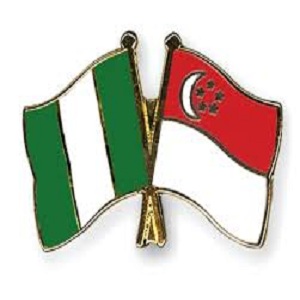
Economic And Trade Cooperation Between Nigeria And Singapore: A Way Forward

Haresh Aswani informed that Tolaram has been in operation in Nigeria for over 40 years. Tolaram are the manufacturers of the Indomie Noodles which has become a household name in Nigeria…..
He said the large consumer population was a great motivation for setting up the business there. He also identified investment policies reforms as factors that encouraged Tolaram to move away from importation and trading to industrialization.

Tolaram manufactures its products in Nigeria. He also confirmed that the company had gone ahead to build the first deep Seaport in West Africa, at Lekki in Lagos, Nigeria. He wished however that the government to government movement is better, in particular he wished to see the conclusion of the bilateral agreements, such as the Investment Promotion and Protection Agreement (IPPA), Bilateral Air Services Agreement (BASA), and the Avoidance of Double Taxation Agreement (DTA), between Nigeria and Singapore. Alhaji Idi Farouk described Nigeria as an investment haven and urged Singaporean investors to take the initiative to move and invest in Nigeria.

He added that it would also be good to rotate the hosting of the Nigeria-Singapore Business and Investment Forum between Nigeria and Singapore. This he said will give Singaporeans the opportunity to see Nigeria and appreciate investment environment there. He also expressed the desire to a resident Singapore High Commissioner in Nigeria to better facilitate the investment drive between both countries.

Mr Chris Chatterton described Methanol as an interesting source of energy from a Nigerian perspective, given its huge oil and gas resource. Already Methanol is a major component in the production of flip flops, (Flip-flops, are a type of open-toed footwear sandal, typically worn as a form of casual wear). He identified that a large population of Nigerian still do their cooking with hard fuel such as kerosene, which is dangerous and a major pollutant, but Methanol is a better substitute.

Nigeria currently flares a considerable amount of gas, the production of Methanol would add an important value chain in the manufacturing sector of the economy. Mr Ian Lee identified three important factors to facilitate business and investment, the people to people interaction, partnerships especially with banks and investment-friendly policies.

He maintained that manpower need to be trained both ways, thus creating super highways for skilled manpower, as well for people, trade and money to flow. Banks from both countries need to collaborate, especially in issuing letters of credit, trade insurance, etc. Bilateral treaties provide huge multiplier effects to business and investments.

Nigeria-Asia Joint Trade Mission And Business Delegation 2019

Nigeria-Asia Joint Trade Mission And Business Delegation give ample networking opportunities with public and private sector representatives already active in the region. Trade Missions to; Singapore, Malaysia, Vietnam, Thailand, Taiwan, Japan, Korea, China, and Hong Kong

Nigeria – Asia Joint Trade Mission and Business Delegation is a bilateral innovative business platform set up to enhance trade, business, investment and economic opportunities.

We are pleased to inform you about the Trade & Investment Mission to Singapore, Malaysia, Vietnam, Thailand, Taiwan, Japan, Korea, China, and Hong Kong. This mission is a joint trade mission initiative and results from our collaboration with our partner from the Business Council for Asia, The Governors of Nigeria and Trade Nigeria Organization.

The Trade Nigeria Organization trade center will organize and lead this joint Trade & Investment Mission to these countries later in the year. The focus will primarily be on investment in both countries and the main aim is to inform participants about the business opportunities available and for them to establish and expand their network in the region.

Nigeria-Asia Joint Trade Mission And Business Delegation are open to all sectors; efforts will be made to tailor parts of the program according to the business interests of the participants.

The event will comprise of formal evening receptions, some lunch meetings and a very full program of briefing and other business meetings.

Nigeria-Asia Joint Trade Mission And Business Delegation offers:

  1. Coordinated Business-to-Business meetings
  2. Cultural Evenings
  3. Briefing sessions with Heads of Delegation, other Heads of Mission, Country Investment Authorities, Ministers and Government Bodies.

Nigeria-Asia Joint Trade Mission And Business Delegation 2019

Singapore
Malaysia
Vietnam
Thailand
Taiwan
Japan
Korea
China and
Hong Kong

Design a site like this with WordPress.com
Get started